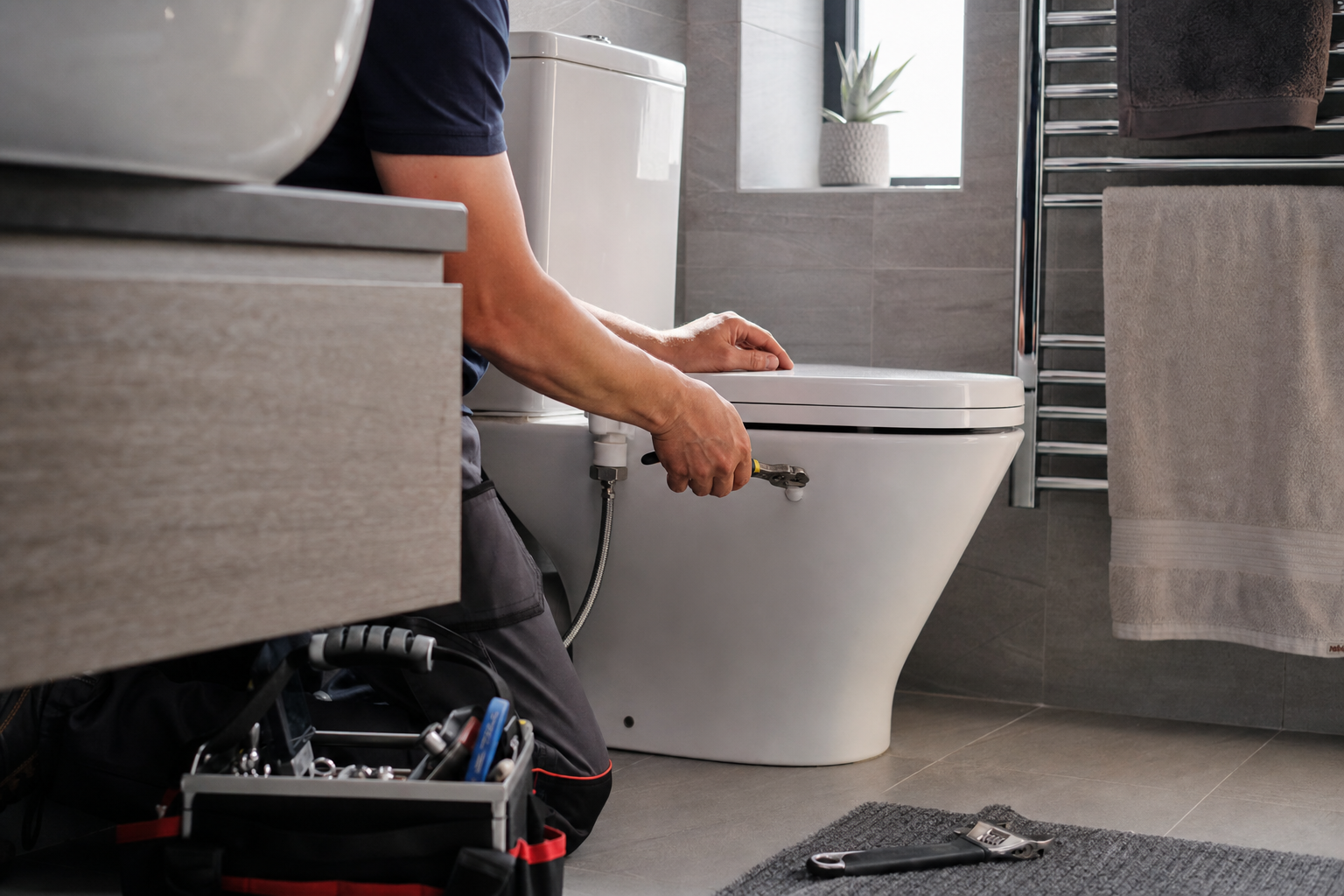
If you need toilet plumbing Paddington, this page is designed to help you work out what is likely wrong, what can usually be repaired, and when a replacement makes more sense. Toilet problems are often urgent, messy and disruptive, especially in flats, rented homes, busy households and commercial premises around Paddington, Hyde Park, Edgware Road, Little Venice and near Paddington Station.
Right On Plumbers Paddington provides practical toilet plumbing support for homeowners, landlords, tenants and local businesses. That includes leaking toilet repairs Paddington, toilet flush repairs and replacements Paddington, toilet installations and replacements Paddington, toilet cistern repairs and replacements Paddington and macerator installations and replacements Paddington. The aim is simple: identify the fault clearly, explain the options in plain English, and carry out the most sensible repair for the property and the budget.
Toilet issues do not always mean a full replacement. In many cases, a worn seal, faulty flush valve, damaged inlet valve, cracked cistern component or blocked waste line can be repaired safely and cost-effectively. In other cases, especially where the toilet is older, repeatedly leaking, badly stained, unstable or inefficient, replacement may be the better long-term choice. The sections below explain the common symptoms, likely causes, decision points and aftercare so you can make an informed decision before booking a visit.
Call 020 3670 4944 or request a visit today.
Leaking Toilet Repairs in Paddington
A leaking toilet can show up in a few different ways: water around the base, a damp patch on the floor, a cistern that keeps refilling, a slow drip from the supply pipe, or a toilet that seems to lose water without obvious cause. Around Paddington, this is one of the most common toilet plumbing problems because small faults can build up over time and then become noticeable all at once.
The first step is to work out where the leak is coming from. A leak at the base often points to a failed pan connector, worn wax seal, loose fixing, or movement in the toilet pan. Water from the cistern may come from a split inlet hose, a faulty valve, a perished seal, or an overflow issue. If the toilet is connected to a concealed cistern, the source can be less obvious and may need careful inspection.
Typical repair work may include replacing seals, tightening or renewing fittings, adjusting the float mechanism, changing a fill valve, reseating a pan connector, or repairing small pipework issues. Where appropriate, the toilet can be isolated, tested and checked for further leaks before the job is considered complete. This is especially important in flats and managed properties near Hyde Park or Little Venice, where a small leak can affect more than one room if left unattended.
There are some clear signs that a repair is needed quickly. These include a persistent smell of waste, water staining at the floor, a noisy cistern, visible dripping, or a toilet that needs repeated topping up. If the leak has damaged flooring, skirting, or the surrounding plaster, the plumbing fault should be dealt with first before any cosmetic repairs.
After a leak repair, it is sensible to keep an eye on the area for a day or two, check that the cistern fills and stops correctly, and make sure the floor remains dry. If the toilet has been leaking for some time, the surrounding fixings and pipework may also need a follow-up check.
Toilet Flush Repairs and Replacements in Paddington
Flush faults are another common reason people search for toilet plumbing in Paddington. A flush may become weak, partial, noisy, stuck, slow to reset or completely inactive. Sometimes the button or handle feels loose. In other cases, the toilet flushes but the cistern does not refill properly, which suggests a problem with the internal mechanism rather than the pan itself.
Likely causes include a worn flush valve, a damaged syphon, a sticking dual-flush mechanism, limescale build-up, a faulty handle linkage, or a fill valve that is not restoring the correct water level. In hard-water areas, internal parts can wear faster than expected, especially if the toilet has not been serviced for a long time.
Repair is often the best starting point if the toilet is otherwise in good condition. A flush mechanism can frequently be adjusted, cleaned or replaced without changing the whole cistern or toilet. If the cistern is cracked, the internal parts are obsolete, or the flush has failed repeatedly, replacement parts or a new cistern may be the better option.
Decision points usually come down to age, condition, and parts availability. If the toilet is modern and the problem is limited to one mechanism, a targeted repair is usually sensible. If the flush has been repaired several times already, or the cistern is noisy, brittle, discoloured or leaking from more than one point, replacement can reduce repeat call-outs and inconvenience.
After a flush repair or replacement, the toilet should be tested several times to confirm the water level, flush strength and refill cycle are all correct. It is also worth checking that the flush button or lever is comfortable to use and that the cistern lid sits properly afterward.
Toilet Installations and Replacements in Paddington
There are times when repairing a toilet is no longer the most practical answer. If the pan is cracked, the toilet rocks on the floor, the glaze is badly worn, the cistern has repeated faults, or the design no longer suits the room, a replacement can be the better long-term investment. This is especially relevant in older Paddington properties where previous fittings may have been altered over time and no longer work efficiently with the existing pipework.
Toilet installations and replacements usually start with checking the existing layout, soil pipe connection, supply route, shut-off point and access around the bathroom or cloakroom. A good replacement should fit the space properly, connect securely, and be easy to maintain. In compact bathrooms near Paddington Station or in converted flats near Edgware Road, neat installation and correct alignment are especially important because space is limited and access can be awkward.
Common reasons to choose replacement over repair include repeated leaks, cracked porcelain, unstable mounting, poor flushing performance, high water usage, and parts that are difficult to source. Landlords may also choose replacement where a toilet has become difficult to keep in reliable working order between tenancies. Businesses may prefer a new installation if the existing unit is heavily worn or causing frequent maintenance issues.
Replacement work should include safe isolation, removal of the old unit, inspection of the waste connection and supply, fitting the new toilet, sealing and securing it correctly, and testing for leaks and flush performance. Once installed, the toilet should be left clean, stable and ready to use.
Aftercare matters. A new toilet should be checked after the first few uses for movement, seepage or unusual noise. If the bathroom floor has recently been re-floored or tiled, it is especially important to confirm that the toilet sits level and the seal remains sound.
Toilet Cistern Repairs and Replacements in Paddington
The cistern is often the part that fails first because it contains moving components, seals and valves that work every time the toilet is flushed. Common cistern problems include constant running water, slow filling, weak flushes, overflow, internal dripping, condensation issues, and visible leaks from the base or side of the cistern.
When diagnosing cistern faults, the likely causes may include a worn flush valve, damaged inlet valve, faulty float, split washer, loose coupling, perished seal, or limescale build-up. In some cases, the cistern can be repaired by replacing only the failed internal parts. In other cases, particularly where the cistern is concealed, cracked, heavily stained or difficult to source parts for, replacement is the more practical route.
For many Paddington households, the main question is whether to repair the cistern or change it. A repair usually makes sense if the toilet is otherwise in good condition and the issue is isolated to one part. Replacement becomes more attractive if there are multiple faults, if the cistern has been leaking for a while, or if the repair would only offer a short-term fix. A full replacement can also improve reliability where the existing cistern has already been patched up more than once.
In shared homes, rental properties and small commercial premises, a faulty cistern can quickly become a nuisance because it increases water use and can make the toilet unreliable for daily use. That is why a proper diagnosis is important before deciding on parts or replacement.
After a cistern repair or replacement, the system should be checked for correct refill time, secure shut-off, smooth flush operation and no seepage around the joints. If the toilet is in a concealed setting, access panels should be left properly fitted and easy to reopen for future maintenance.
Macerator Installations and Replacements in Paddington
Macerator toilets and pumped waste systems are often used where standard gravity drainage is difficult, such as basement rooms, converted spaces, compact en-suites or awkward layouts. When they work properly, they provide a flexible solution. When they fail, the symptoms can be noisy operation, poor discharge, repeated tripping, unpleasant smells, or water backing up into the unit.
Common macerator faults include worn blades, blocked waste lines, scale build-up, motor failure, electrical issues, or a pump that is no longer able to move waste effectively. These systems can sometimes be repaired, but they should always be assessed carefully because the cause of the fault may be in the unit itself or in the connected pipework.
A repair may be enough if the issue is due to a blockage, a simple obstruction, or a replaceable internal component. Replacement may be the better option if the macerator is old, frequently failing, excessively noisy, or beyond practical repair. If a system has been installed in a busy property near St Mary’s Hospital or in a rental flat with regular use, reliability is often the deciding factor.
Before any macerator installation or replacement, it is important to confirm the location, waste route, power supply, access for servicing and the suitability of the proposed unit. A poorly matched macerator can create ongoing problems, so the replacement should be chosen to suit the property rather than simply to fit the existing space.
After installation, the unit should be tested with water only first, then under normal use, to confirm it starts, pumps and stops correctly. Customers should also be shown how to use and maintain it properly, including what should not be flushed into the system. That helps reduce future blockages and unnecessary wear.
Across all toilet plumbing work, the decision between repair and replacement usually comes down to five things: the age of the fitting, the nature of the fault, the availability of parts, the condition of the surrounding pipework, and how often the problem has returned before. If the toilet is still structurally sound and the fault is localised, repair is often the best first step. If the toilet is old, unstable, repeatedly leaking or unreliable, replacement may be more cost-effective over time.
Right On Plumbers Paddington focuses on clear advice and practical support for local properties. That includes checking the visible symptoms, explaining the likely cause, carrying out the appropriate repair, and advising when replacement is the safer or better-value option. Recent local work has included toilet plumbing enquiries in Paddington, an outside tap fitting in Hyde Park with neat pipe clipping and leak testing, and a kitchen mixer tap replacement in Paddington with the feeds checked afterwards. Those jobs reflect the same approach: careful diagnosis, tidy workmanship and straightforward customer guidance.
If you are dealing with a leaking toilet, flush fault, cistern problem, blocked toilet or macerator issue in Paddington or nearby areas, call 020 3670 4944 or request a visit today. We also support related plumbing and heating work including plumber services, emergency plumbing, boiler repairs, boiler installations, central heating, underfloor heating, gas engineers and water leaks.
For local toilet plumbing support near Paddington Station, Hyde Park, St Mary’s Hospital, Edgware Road and Little Venice, contact Right On Plumbers Paddington on 020 3670 4944 or email info@plumbers-paddington.co.uk.